


The best tools for grooming dogs at home aren't the most expensive ones - they're the ones that actually match your dog's coat. Pick the wrong brush for a double-coated Husky, or grab straight shears when you should be using curved ones on a Poodle, and you're not just wasting time - you're making the job harder than it needs to be. I've seen this mistake more times than I can count: someone spends good money on a nice set of scissors and still ends up with a choppy, uneven trim because the tool wasn't built for that coat texture. Coat type is the real starting point. Everything else follows from there.
What Are the Essential Tools for Grooming Dogs at Home?
Let me be straightforward about this: you don't need a huge kit to groom your dog well at home. The basics cover 80% of what you'll ever actually do - brushing, trimming, and nail care. Here's what earns a permanent spot in any honest grooming setup:
-
Slicker brush - removes loose hair, detangles, and smooths the topcoat. The workhorse of every session.
-
Grooming comb - follows up after brushing to catch what the brush missed, especially around ears, paws, and the tail base.
-
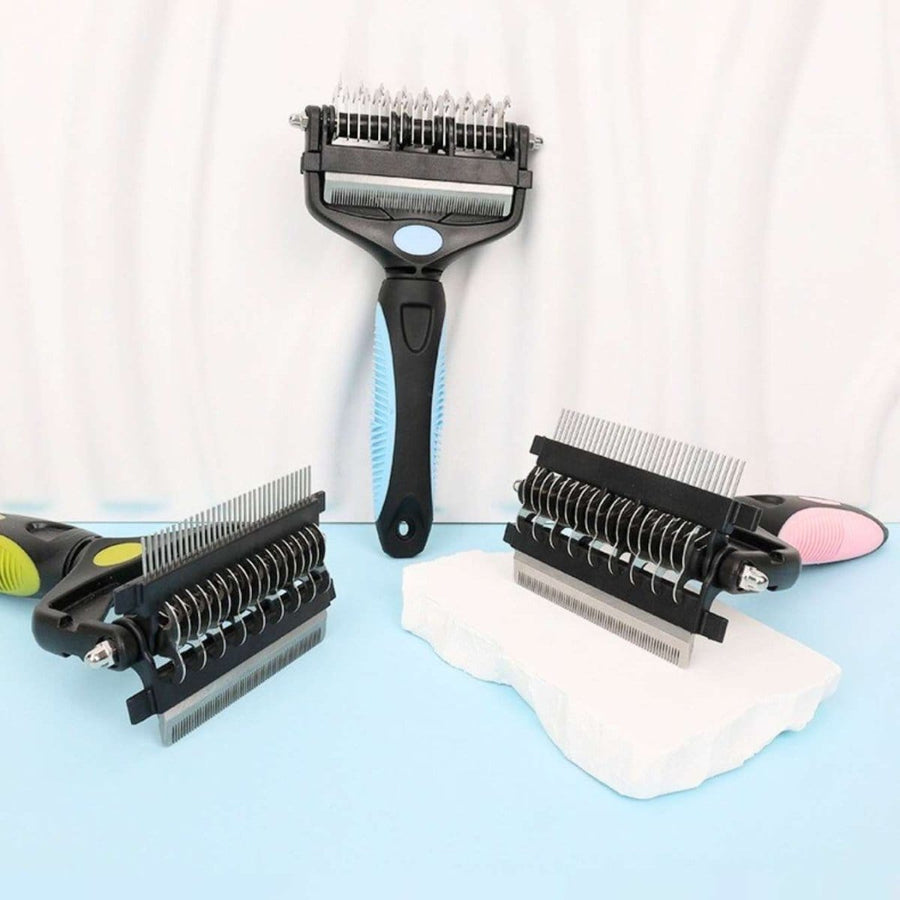
Dematting tool or deshedding brush - reaches deeper into the undercoat before mats have a chance to form.
-
Grooming scissors/shears - for trimming around the face, paws, sanitary areas, and general shaping.
-
Nail clippers or nail grinder - keeps nails at a healthy length and prevents long-term joint issues.
One thing I always emphasize to people starting out: a brush and a comb are not the same tool, and having both isn't redundant. The brush does the heavy lifting; the comb is your quality check. Run a comb through the coat after brushing - if it glides through, you're done. If it catches, there's still work to do. Simple rule, but it changes how people approach a session.
How Do You Choose the Right Tools for Grooming Dogs Based on Coat Type?
Coat type is where the decision actually starts - not breed name, not dog size, not price point. Two dogs the same weight can need entirely different tool sets if one has a smooth short coat and the other has a thick double coat. This is the part most general guides skip over, and it's the most important part.
Short Coats - Beagle, Boxer, Dalmatian, Vizsla
Honestly, short-coated dogs are the most forgiving to groom at home. They shed steadily but don't mat, so the main job is just pulling out dead hair and keeping the skin in good shape.
What actually works: A rubber curry brush or a soft slicker brush 2-3 times a week handles most of the maintenance. A wide-tooth grooming comb is enough for finishing. For stray hairs around the paws or sanitary area, a small pair of straight scissors is all you need.
My honest take - don't overthink this coat type. People come in asking about thinning shears or chunkers for their Boxer, and the answer is: you don't need them. Keep it simple. The coat will thank you for it.

Medium Coats - Golden Retriever, Cocker Spaniel, Border Collie
This is where home grooming starts to get interesting. Medium-coated breeds develop feathering along the legs, ears, chest, and belly - and that feathering is where things get messy if you're using the wrong tools.
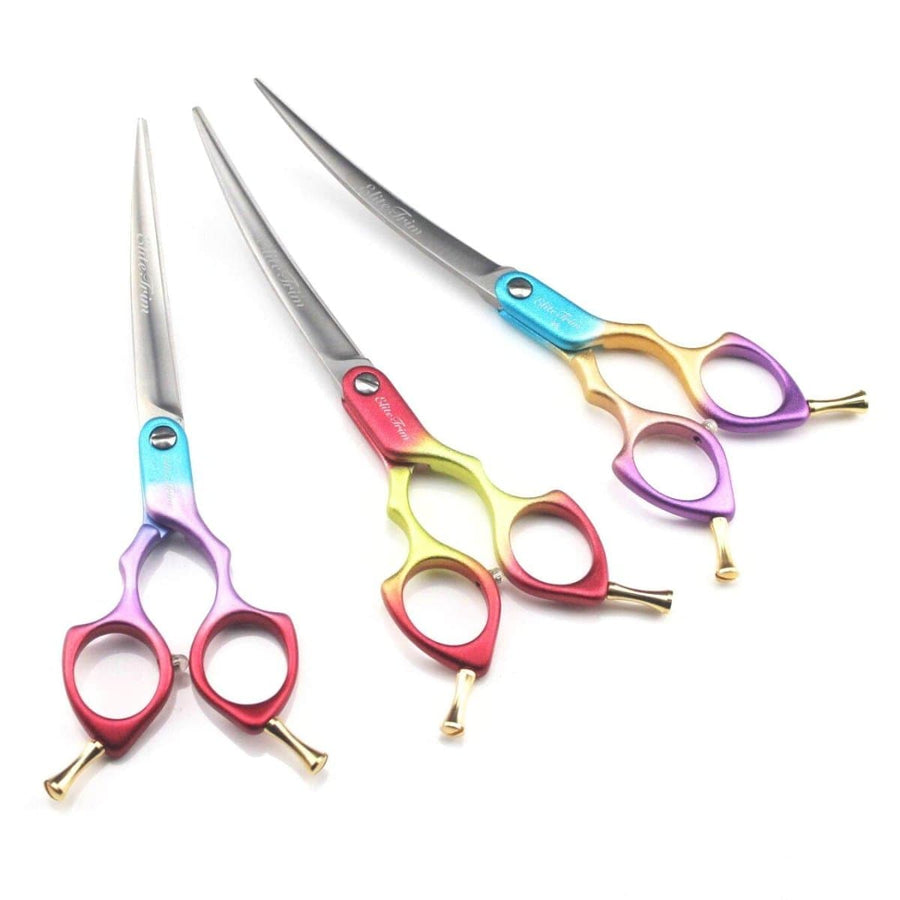
What actually works: Daily or every-other-day brushing with a slicker brush, followed by a steel comb through the feathering. For trimming, curved shears are genuinely the better choice here over straight scissors - they follow the natural curve of the body and produce a finish that looks intentional rather than hacked. Thinning shears clean up any harsh lines afterward.
In my experience, this coat type is where home groomers first notice the real difference between scissor types. That moment when a curved shear follows the rump line smoothly and the coat just falls into shape - it's hard to go back to straight scissors after that. The full range of curved scissors for dogs is worth browsing if you haven't already invested in a curved pair.
Long Coats - Shih Tzu, Maltese, Lhasa Apso, Afghan Hound
Long coats are the most time-intensive, and if I'm being direct - the most punishing when neglected. The coat mats fast, especially behind the ears, under the armpits, and around the collar. These are the spots that get skipped in a quick brush-through, and then six weeks later you're trying to work out a mat the size of a golf ball.
What actually works: A wide-tooth grooming comb and a dematting brush are non-negotiable here. For scissor work, straight shears handle bulk trimming well, while thinning shears soften the finish and remove weight from dense sections without leaving those choppy, stepped lines that give away a home groom. Curved shears on the face - around the muzzle and cheeks - make a noticeable difference in the overall shape.
If you're grooming a Shih Tzu specifically, the 13 Shih Tzu grooming styles guide is one of the more practical references I've seen for understanding how different shear choices produce completely different results on the same coat.

Double Coats - Husky, Labrador, Corgi, German Shepherd
This is the coat type where I see the most well-intentioned mistakes. Someone's Husky is shedding everywhere in summer, so they decide to shave it down. Don't do this. The double coat isn't just insulation - it's a thermoregulation system. Shaving it disrupts how the dog manages body temperature in both heat and cold, and the regrowth is often patchy and changes texture permanently.
What actually works: A quality deshedding brush or undercoat rake that pulls out the dense dead undercoat without stripping the guard hairs. Follow up with a slicker brush to smooth everything down. For stray hairs around paws and ears, straight scissors are enough - no fancy shear work needed on the body.
The 3-in-1 deshedding and dematting brush is one of the more practical options for keeping the kit compact while still handling undercoat work properly. If you want a deeper comparison of your brush options, the slicker brush vs deshedding tool guide lays it out clearly.
Curly and Wavy Coats - Poodle, Doodle, Bichon Frisé, Portuguese Water Dog
Curly coats are deceptively high-maintenance. They don't shed visibly - so owners sometimes assume they don't need much grooming. What actually happens is the dead hair stays trapped in the curl, mats form underneath, and by the time it's visible the situation is already serious.
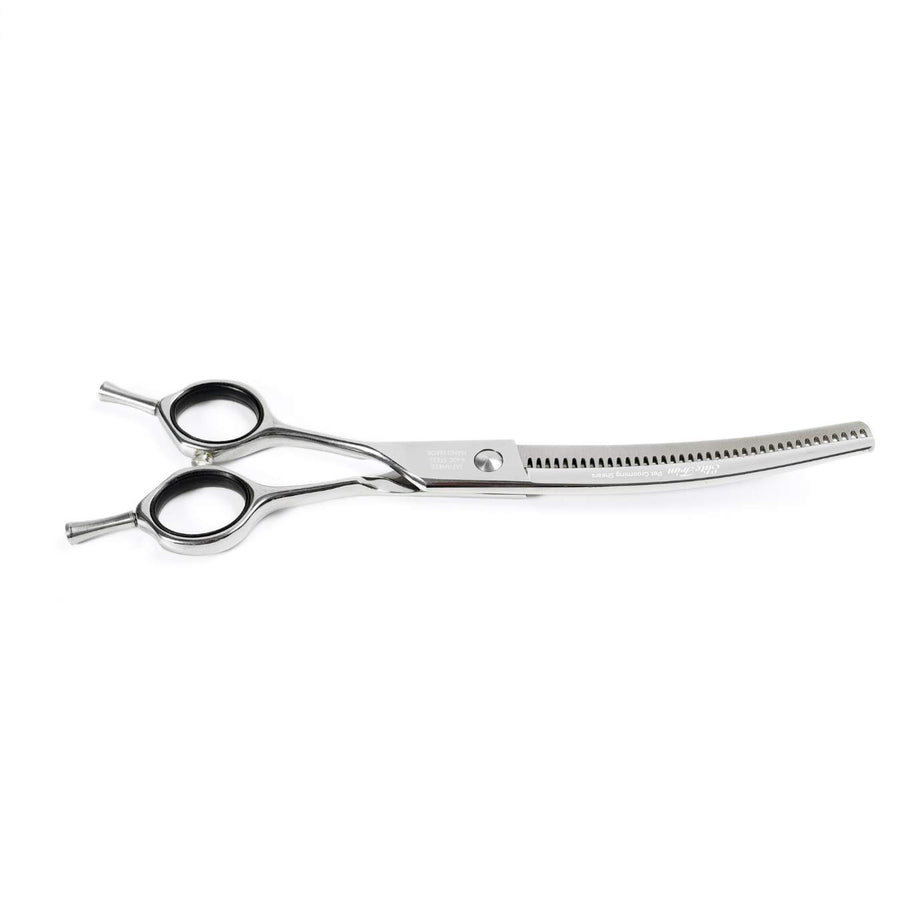
What actually works: Daily brushing with a slicker brush and steel comb is the baseline. For shaping, this is where chunkers genuinely earn their place - they're not just a "nice to have." Chunkers remove bulk from thick curly coats in a way that leaves a natural, textured finish that straight shears simply can't replicate. Straight shears on a curly coat tend to look blunt and obvious. Clippers with guard combs work well for body work on longer Doodle coats.
I'd honestly recommend starting with chunkers before buying a second pair of straight shears if you have a curly-coated dog. The top-rated chunkers collection has options across different tooth counts for different coat densities. And if you're working toward specific Poodle styles, the 19 Poodle grooming styles guide shows exactly what's achievable with the right shear combination at home.
Wiry Coats - Schnauzer, West Highland Terrier, Wire Fox Terrier
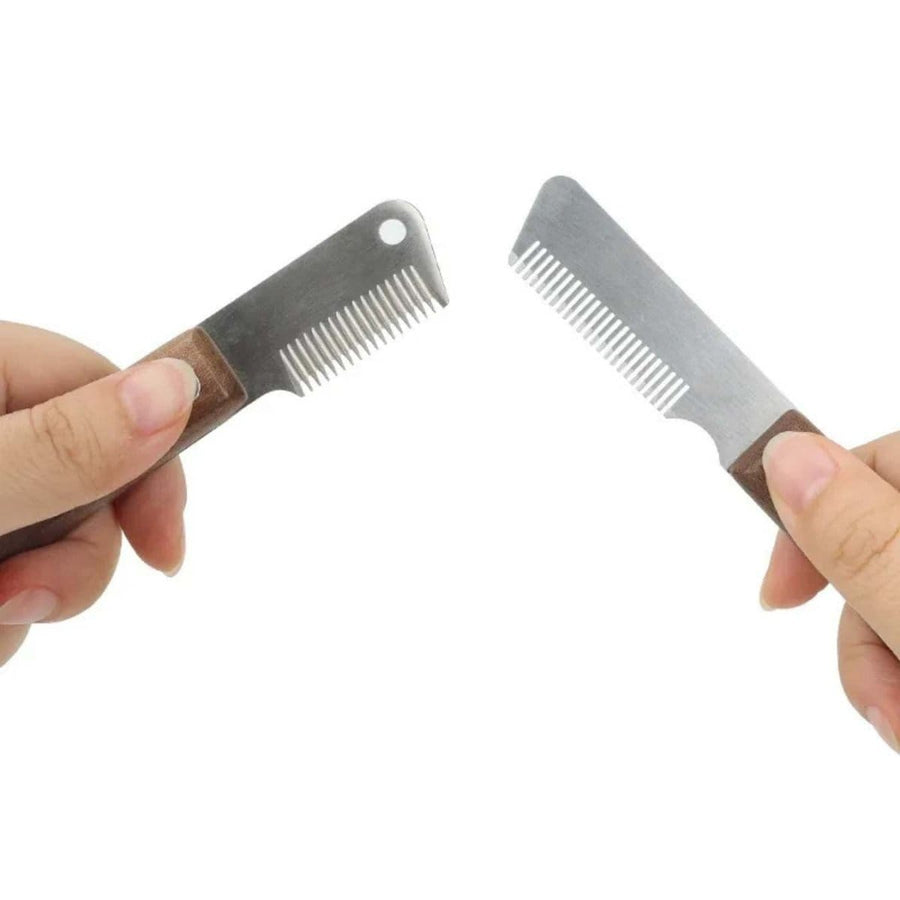
Wiry coats have a texture worth preserving. The problem is that clippers soften the coat over time - repeated clipping gradually loses the harsh, crisp texture that defines these breeds. For owners who care about maintaining that look, hand stripping with a stripping knife is the technique that keeps the texture intact.
What actually works: A walnut-handled stripping knife gives you better grip and control than cheaper plastic versions during a hand-stripping session. Straight shears for general trimming and shaping around the face and legs. A firm slicker brush to work through the shorter body coat between sessions.
I won't oversell hand stripping as easy - it takes practice and patience. But if you have a Schnauzer or a Westie and you want that classic profile maintained, it's the right tool for the job.
Which Grooming Scissors Should You Actually Use - And When?
This is one of the most common points of confusion for home groomers, and it's worth addressing directly. Using the wrong scissors doesn't just produce bad results - it makes the job feel harder than it is.
Straight shears are your all-purpose cutting tool. Bulk removal, paw trims, clean edges - this is what they're built for. Curved shears follow body contours naturally: the rump, the head shape, around the ears. The curve does the work of shaping that a straight blade has to fight against. Thinning shears remove weight and blend harsh cut lines without changing the overall length - they're a finishing tool, not a primary cutting tool. Chunkers take out bulk while leaving a natural, textured finish - essential for curly and wavy coats.
My personal recommendation: if you're only going to buy one pair of scissors to start, buy curved shears. They handle more of the actual shaping work than straight scissors do, and a good curved shear on a medium or long coat produces results that genuinely look polished. The types of dog grooming scissors guide breaks down every type in detail if you want the full picture before buying.
For a complete starter set, the Home Grooming Series 7" Standard Shears Kit covers straight, curved, and thinning in one matched kit - a smart way to start without buying blind.
What Nail Care Tools Do You Actually Need?
Nail care is the part of home grooming most people skip - and it's the part that matters most for long-term health. Overgrown nails change how a dog distributes weight when walking, which creates joint stress over months and years. It's not dramatic, but it's real.
The choice between a nail grinder and nail clippers comes down to two things: your dog's temperament, and nail thickness. Clippers are fast and clean on cooperative dogs - the LED nail clippers are particularly useful on dark nails where seeing the quick is genuinely difficult without good lighting. Grinders are slower but much gentler for anxious dogs, and they smooth the nail edge automatically. The 6-speed nail grinder with dual LED handles medium and large dogs well and runs quietly enough to keep stress levels down.
For small dogs and puppies, nail tool size matters more than people think. A heavy clipper on a small dog creates awkward handling and increases the chance of a bad cut. The full technique is covered step-by-step in the how to trim dog nails guide - worth reading before your first session.
Brushes and Combs - What's Worth Having?
A slicker brush is the single most useful tool in any grooming kit, regardless of coat type. Fine wire bristles penetrate the topcoat, pull out loose hair, and start detangling in a single pass. The comb comes after to verify the job is done.
For double-coated and heavy shedding breeds, a dedicated deshedding brush reaches the undercoat that a slicker brush simply can't touch. The Forest Dog Slicker Brush and Japanese Wood Slicker Brush are both solid options - the wooden handles give better control during longer sessions, which matters more than it sounds when you're working through a thick coat.
For long and curly coats, a dematting tool is a separate purchase that pays for itself quickly. Trying to brush out a mat with a slicker brush usually makes it tighter. A dedicated dematting comb or the TimberGroom™ Walnut Dematting Brush works through mats without forcing you to cut them out - which matters a lot on longer coats where you're trying to preserve length.
A Few Things Most Guides Don't Mention
Left-handed groomers are often using the wrong tools without realizing it. Standard shears are ground for right-hand use - a left-handed groomer using them is cutting against the blade's natural angle, which produces ragged cuts and tires out the hand faster. Left-handed shears are mirror-ground. If you're left-handed and grooming has always felt awkward, that's probably why. The left-handed dog grooming shears collection covers everything from individual pairs to full sets.
On kits vs individual tools: for anyone just starting out, a kit is the smarter first purchase. You get a matched set that works together, and you learn what each tool actually does before deciding what you want to upgrade. The 6-in-1 Advanced Shears Kit is a practical option - it covers the main tool types at a better price point than buying each separately. Once you've developed preferences, then start building individual pieces around your specific dog's needs.
On maintenance: wipe your shear blades after every session, oil the pivot point, and brush clipper blades out after each use. Dull shears fold hair instead of cutting it - the dog feels that, even if you can't see it clearly. Get them sharpened every 6-12 months depending on how often you use them.
Conclusion
The tools for grooming dogs at home that actually work are the ones chosen for the coat in front of you. Match the brush to the texture, pick shears based on what the coat needs - not what looks most impressive - and don't let nail care slide. Build the kit around your dog, not around what sounds complete on paper. Browse the full range at EliteTrim Grooming - trusted by over 80,000 groomers and pet parents worldwide, for good reason.


